Wednesday, 18 July 2012

Chev's Kilimanjaro Climb: Some thoughts

Wow! In my life I never thought I’d attempt climbing any mountain, never mind the highest free standing mountain in the world. Truly-as a very blessedly busy mother of 6 fabulous children ranging from 20 to 4, I struggle in my life to find the time to exercise regularly, now I am training daily, hiking for hours, accumulating strange gear that I will most probably never wear again, all for the sake of this massive undertaking.

After all, I grew up in NYC...mountains were not exactly part of the agenda! There are so many
factors that would normally make me run a mile (ok-walk a mile!)... the bitterly cold weather (-20 degrees Celsius), the altitude story and all that comes with, no bathrooms, no showers for
a week, the intense training regime etc...WHY? What is compelling me?

For starters I feel I am being drawn to this climb, like I am being pulled towards this wonderful life- changing experience. Nothing in this world happens by accident and I believe there’s great divine intervention as to the timing this climb presented itself into my life. Over these past few years I have lost a few special beautiful young friends to terrible illness. I watched as they lost the capacity to look after themselves, the use of their bodies-once strong and healthy, dignity and pride, independence and all connection to physicality and materialism. Yet, I also was privileged to witness absolute beauty, courage, perspective, and spirit that I had never dreamed possible given such painful circumstances. I realized that the spirit has no limits, that the inner magnificence of the soul knows no boundaries. When all is stripped away, all that we are left with is our connection to ourselves- our real selves- our infinite spiritual selves. All that ultimately remains is the trust we form with our Creator and the knowledge of what is truly valuable in this world.

Fear? Yes, there are many things to fear in this challenging life. Do we ever really know what is
around the corner? So, we are given a choice, to live with fear or to let go and trust that we will be looked after and given absolutely everything we need, not always everything we like, but all
that we need to blossom into the people we are meant to be. This mountain represents for me the letting go of fear, the embracing of the difficult, the trusting in the unknown, the discovering courage and strength where we never imagined they existed. I am climbing this mountain largely because I CAN. I am so blessed with a healthy body, with eyes that see, with lungs that breath, with a family that loves and supports me. Many people in my world have not been given these privileges and blessings. I commit to using mine, with G-d’s help, to the best of my ability.

I can think of no greater cause to climb for than ORT SA/ORT JET. It is an organization that is very close to my heart as it has been my amazing husband Paul’s passion and dream for many years now. He has poured his heart and soul, time and effort into building such a fantastic place, where struggling businesses and individuals (in particular women who are in compromised financial situations) are given tremendous assistance to get back on their feet. It is all about empowerment and dignity and together with his wonderful team they strive to create a safe space where the utmost sensitivity, kindness and professionalism are upheld. They deserve our support, admiration and respect. They certainly have mine! Please join me in helping to ensure that they continue their very special and much needed services to the community.

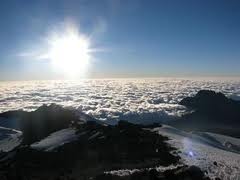
I am no stranger to challenge and pain nor am I a stranger to joy and redemption, I cannot wait to stand on the peak of Africa just as the sun rises, overlooking the breathtaking snow capped glaciers, the magnificence of our beautiful world and to thank my G-d for every big and little blessing and opportunity in my life.

Here’s to a fabulous adventure, L’chaim!

by Chev Bacher

Tuesday, 10 July 2012

What's your why?

Last night, our fabulous friend and fellow climber Dr. Kiki Marx hosted a beautiful gathering for the Kili team. We had two of the "tribe" celebrating birthdays and in typically thoughtful Kiki fashion, she had bought Franjelica's cupcakes and lit birthday candles. As we relaxed and caught up over hot bowls of soup and bubbly glasses of wine, we were suffused with a sense of well-being, belonging and excitement.

Our intrepid tribe leader Robyn had another treat for us - she had invited Brad Shorkend founder of Urban Everest Lateral Thinking, a dynamic organisation defying simple characterisation to give us a presentation. Brad develops - people, ideas, corporations, organisations, communities. He sells dreams and his currency is something he calls "infectious action" transacted by acquiring and mastering thinking processes. We were lucky enough to have him share his experiences of his own Kilimanjaro climb in December 2010 for the Laureus Sport for Good Foundation with tennis legend Martina Navratilova.  There isn't enough space to describe in detail how important Brad's time with us was. He gave us specific, practical advice from what and how to pack gear and snacks, to the mountain  - it's terrain and temperamental weather conditions. He gave us invaluable insight into the minutiae of camp life and the porters and guides who will be our support system and life line on the mountain. We were in turn amazed, terrified, inspired. We became emotional watching other people's successes and contemplating the disappointment of strangers. When Brad showed us a photograph of Stella point, a spectacular shot of the climbers resting in snow, against a backdrop of a blue sky with the light of day bursting in a star of promise around them, just 45 minutes from Uhuru peak and the summit, there was an audible collective intake of breath.
Stella Point
Brad ended his presentation with a challenge to each of us, to contemplate the personal whys of our journeys. Some of us have explored these to an extent and even written about them. For many of us, the why is a profound intangible, escaping neat definition.

Although I think I have many personal whys, I can certainly trace one of them back to a function I attended last year and as is so often the case with me - it all centred around food.

I am known amongst my friends and family as being a lover of food. I profess to love everything about it from buying new recipe books and reading them like eagerly awaited bed-time stories to planning menus and sourcing their ingredients. I frequently post my weekend menus onto my Facebook profile - purely for the joy of sharing the abundance that is the world of beautiful nourishment. Yet, I will admit to feeling that creeping dread when I am faced with the last chore of the day - packing my children's lunch boxes. One of the things I have told friends I love most about school holidays is that the monotonous burden - and it feels like a burden - of packing school snacks and lunches is temporarily lifted. A momentary reprieve which I relish in favour of haphazard and spontaneous nibbles when the mood moves and the appetite dictates that it is indeed feeding time.

Last year, my husband and I along with some of our friends and about 400 other members of our community attended a fundraiser for an organisation called Yad Aharon, in particular support of a project called Ohr Natanel. An outreach organisation dedicated to providing food for impoverished families, the Ohr Natanel project specifically raises funds for children's lunch boxes. The fundraiser involved a dinner - a three course affair replete with soup, perogen, salad, choices of chicken and beef and an array of seemingly never ending desserts and a talk by one of my favourite authors Joanne Fedler (more about her later).

At the start of the evening, the organisers screened a DVD compiled for the event. In it, an anonymous recipient of the charity spoke about how she would try and prioritise the payment of her bills over grocery shopping. Her rent was covered, sadly food was not. I thought back to just that morning when I had gone shopping at Woolworths. I had bought fruit: naartjies and bananas and paw paws and pineapples. I had bought lettuce: crisp cos; soft butter and an Italian mix with peppery arugula, mild red tip leaf, frilly endive, radicchio, curly leaf lettuce. I stocked up on cucumbers (English and Israeli) and tomatoes (baby rosa and heirloom). For my children's lunch boxes I made sure to pick up several packets of baby carrots, baby corn, sugar snap peas and mangetout. For my husband I picked up Fuerte avocados, bean sprouts, grated beetroot, baby spinach. We needed cheese - so I bought silky Danish feta and crumbly organic feta. I bought plain low fat cream cheese and plain low fat cottage cheese, and cream cheese rolled in tomato and herbs and cottage cheese with chives. The kids had eaten all the yogurts so naturally I stocked up on 6 packs of smooth fruit yogurt and plain Bulgarian and a couple of yogurts with stewed fruit or black cherries or shaved coconut or some other indulgence.


In planning dinners for the next few evenings I included potatoes (orange fleshed sweet potatoes, and Mediterranean and baby potatoes), a pack of plump baby marrows, round gem squash, vibrant pumpkin and for a new butternut laksa soup I wanted to try - the requisite butternut, lemon grass, fresh limes, curry leaves, coriander, coconut milk and a new bottle of Chinese 5 spice. For my morning toast I picked up an oat and honey loaf (delicious with unsalted butter - oh we needed more of that too), a soy and linseed loaf and a low GI brown health loaf. At the till, I handed over my credit card and didn't think twice - except perhaps to shake my head in vague annoyance that it would be me packing the damn lunch boxes AGAIN! And so, it was no surprise that when I heard a woman admit that she had to make a choice between providing the roof over her children's heads or the food in their school bags I was reduced to guilty and not very lady-like tears.

Later when Joanne Fedler spoke a little about her journey with food, which prompted her to write "When Hungry, Eat", although I had read and loved the book, I appreciated both her and the writing on a whole new level. Hunger is not always about food. It is also about spiritual and emotional need. It is about being able to reach out to someone else, recognise another's emptiness and be willing to sit with your own sense of "less" in the pursuit of creating "more" for someone else. Sometimes G-d teaches us our lessons in gentle ways and sometimes we require a harsher hand. There are times when G-d makes us lose that which we take for granted in order to make us see what is really important and sometimes he allows us the far lesser task of watching someone else's brave struggle, while having the honour of filling out a debit order. That night I sat in a privileged chair, having paid for my dinner (all 3 courses of it). I got to go home and with love and gratitude prepare a salad for my husband and pack 2 lunch boxes filled with nourishing, colourful food. I was allowed to plan a menu that involved basmati rice and filo pastry and the following  morning when both my boys asked for seconds at breakfast I got to thank G-d from the bottom of my heart that seconds was always an option.
Amit celebrates his 6th birthday with a
decadent chocolate pinata cake

My husband is a gifted teacher - a vocation he loves desperately in a tough school where he is highly respected, committed to a profession not widely acknowledged to be well remunerated. I am thankful every day that I have a qualification and a profession that allows me to run a busy private practise which while leaving me tired and often overstretched, allows me the luxury of never ever contemplating whether we can have electricity or food, school clothes or winter pyjamas, supper or breakfast, petrol or school fees. If G-d forbid, I was ever faced with the terrible situation of having to raise my children by myself, I would be lonely, but I would pay the bills. When Robyn talks about the women she works with, the long hours for inadequate pay, the daily grind of a day quagmired in thankless pettiness and the constant juggle of anxiety and despair, I know that I'm partly climbing to provide them with some of what I've been gifted with. Independence.

If even one woman is trained through the envisaged Skills Academy, provided with an education, which leads to marketable skills and those translate into sustainable independence, then that will be the success of this project. I dream of a phone call from a woman who has been a recipient of Yad Aharon to the organisers to ask them to remove her  and her children off their recipient list and put them instead onto the donors list. This is the dream for which we are climbing. If this were to become a reality would it be the only reason for the climb? No. Would it be enough? I think so.

Amali 2 years, enjoying an abundance of summer fruit
by Tali Frankel

Faith will move mountains

Whichever way you look at it, this is no simple saying .... as what started off as a group of women running (huffing and puffing) hills in the local suburb, we have taken on the highest peak in Africa.... through absolute faith in ourselves, our abilities, our strengths, our passion, our group commitment, we have turned into an emPOWERed team.....

.... and sometimes a crazed one too. As part of this journey we are on, I think I talk for most of the team, that we find ourselves unable to pass a Cape Union Mart, Drifters, Sportsman's Warehouse, or any other sport store in a mall....the last place I would have favoured only months ago....our obsession includes such names as First Ascent, Under Armour, Columbia, KWay, the latest style base layers, wicking shirts, trekking pants, trekking poles, bladders (the kind you carry in your backpack!!), 100, 200 or 300 fleece, thermal underwear and outer shell clothing, buffs ... and most important of all, no cotton!! The list is endless, and these all take on a new meaning in this exciting lead up to the actual climb.

My mind seems unable to complete a conversation without veering subconsciously towards that peak in Africa ... do I have enough gear, have I trained hard enough? will we be warm enough? are our boots going to be worn in enough to be comfortable to endure hiking 6-7 hours a day for seven days, covering a total of over 50km? what else is there that we haven't thought about..... totally consuming, but so exciting.

While there is so much physical preparation, throughout all of this is the constant awareness that we are doing something bigger than life, something beyond our comfort zones, and the lingering thought..... WHY ....... and as Brad Shorkend of Urban Everest ended his most amazing presentation to our group .... what is your purpose of doing this climb.... what is your W H Y ?

To be honest I still don't really know why this appealed to me so strongly, I just knew I had to do it, its like my soul needed it. My feeling is that I will really only have the true answer on the Umbwe trail ...at Stellar Point ... at the Summit ... or maybe even back in the comfort of home on our return.

But as a starting point of my own personal journey, mountains are a big part of life, both literally and figuratively. I have climbed a few emotional ones myself and I have been thinking long and hard as to who I am going to honor on my climb. As I have figured that for this to be worthwhile and to have an enduring outcome, I want it to be more about others than it is about me.

Firstly, having been affected by illness of those close to me, my mother succumbing far too young, my sister surviving a nasty brush with cancer, and so so many friends lives being cut short or radically changed by illness and disease, I feel that these women deserve to conquer Kili with us, to these women who wake up every morning with the weight of illness bearing down on them, to still have to get up and be wives, mothers, daughters, sisters. And I have seen so many take on their struggle with love, light and pure faith - often giving strength to those trying to help. To these special brave women I will walk with you in my heart and on my mind.

Secondly, in my life, I have loving role models in my late mother, my dear sisters and sister-in-law and my special friends, who have become family. These strong women, who are also all struggling with their own mountains, have been my shelter, my safe place. I am so grateful to each and every one of them for being in my life, and I will take every step filled with love for them and an inner strength in knowing that they are behind me.

And while they all hold special places in my heart and I will carry them all with me, my climb is ultimately to honour my four beautiful, special children of whom I am so proud, and love so deeply (and of course my husband who I adore and is most definitely a huge part of my climb!!).

In honouring them through this spiritual and physical climb I am undertaking, my blessing to them is :-

.....that they continue to grow in God's way, to be proud, honourable, compassionate and empowered members of the next generation, and that they climb their own personal mountains with grace and integrity.

.... that they always be proud and stand for their beliefs. Religion gives you spiritual ideals. Ideals are what make life meaningful. Ideals will bring happiness to you in your life. And religion translates these ideals into simple daily deeds. Life is made by what you live for. And I know that they will always find meaning and live a life of value.

.... that they always make space for G-d in their lives. To be the best that they can, and never be afraid to learn and grow. They are a blessing to me, may G-d help them to be a blessing to others.

I feel blessed to be able to go on this adventure. And I know that faith CAN move mountains (or at least get us up the mountain!!)   May many more blessings come from this incredible journey we have begun...

"It is not the mountain we conquer but ourselves."
-- Sir Edmund Hillary

by Kate Gershuni

Saturday, 7 July 2012

The Cause


I’ve written quite a bit about my personal journey so far – the training, my thinking and my fears. I think it is now time to take a look at the raison d’etre for this journey.

As my holiday in Mauritius comes to an end, it is a good time for me to express my gratitude for an amazing holiday that came at exactly the right time. When I arrived, I was feeling exhausted and in desperate need for some me time. As I leave, I feel blessed and rejuvenated. The resort we stayed in catered to our every whim and we all felt absolutely spoilt every minute of the day. We barely had to glance to the side and a waiter would be there to ask if there was anything we needed.

Resort life feels like a self-contained world where you can almost begin to believe that this is what the island is about. We took one day to tour some of the towns in the Island and were struck by the stark reality of island life. While we were rejuvenating ourselves and relaxing at the resort, there are people living in absolute poverty, desperate for a way to make a living and relying on us tourists to provide them with a way to earn some income. The contrast was thought provoking.

We see this dichotomy everywhere in the world. I believe that it is up to every one of us to make sure that we are grateful for what we have and that we contribute to others that are less fortunate than ourselves wherever we can. That is why I’m proud of the fact that while the Kilimanjaro trip is a personal journey of meaning and growth, it is also about a cause that is larger than myself. This trip is about inspiring women in challenging circumstances to know that anything is possible, one step at a time. The charity that we’re supporting is the Women’s Empowerment Division of ORTJET and the aim is to establish an Academy that will provide training of marketable skills, teach financial management and ensure sustainable independence.

This is a dream to raise hope and restore dignity.


As we go on in our daily lives, hundreds of women across our communities battle a never-ending onslaught of hunger, anxiety and self-doubt. Their decisions involve making choices between providing a roof over their children’s heads, or food in their lunch boxes. They rely on hand-outs, food parcels and the generosity of strangers. The purpose of the Kilimanjaro campaign is not only to raise awareness of the needs of these divorced, widowed, abused and vulnerable women but more importantly to raise enough money to establish the Academy.

The charity that is creating this Academy is ORT SA. Their motto is "Educating for Life". Giving skills, tools and education to South Africans from all backgrounds, cultures and education levels, helping all ages to ensure gainful employment and moulding people into contributing members of society.

If you believe as we do, that the best way to give to someone is to equip them not with a food parcel but with the ability to earn, not with a welfare cheque but with marketable skills, not with gratefulness but with dignity – then join us on our incredible journey.

If you would like to join us in championing this worthy cause, please  contribute via EFT.

Thank you all for your support!

Banking details:
Johannesburg Women’s ORT
Standard Bank Norwood Mall
Branch code: 004105
Account number: 001824538
SWIFT code IBAN : SBZAZAJJ
Ref: Your Name

by Daphna Horowitz with excerpts by Tali Frankel

Thursday, 5 July 2012

Slow and Steady


Ok… so I was all gung-ho, motivated and determined to create the extra hours in the day and the extra energy it took to make time for the ambitious training programme for Kili and I did very well until… I got sick!

 It started with a simple cold and a few sniffles and I was still going strong. This will take a couple of days to clear and I’ll be back in training – can’t let anything hold me back at this stage – I told myself. And that’s exactly what I did… took 3 days off and was back in training quick as a flash until… I got sick!

As a quick aside here, I need to say that there was no easing in to the training for me. From the get go I was pushing myself to the limits – running that little bit faster, staying in core-building positions that little bit longer. In addition, there was no change to my already frenetic lifestyle – working till late at night (or the early hours of the morning) to make sure that everything was still getting the attention it needed. Everything except me of course! I was very proud of myself that I had actually created a couple of extra hours on training days and nothing needed to change. Aren’t we always saying we need a few extra hours in our days?

Well… then I got sick! This time it wasn’t a little sniffle that would take a couple of days to clear up. This time I was hit with a flu that every day I woke up feeling worse than the day before. For an A-type like me this is torture and all I do is continue to push through. After 5 days of this (and thankfully the arrival of the weekend and so no need to change any work commitments!) I finally succumbed – with no voice and a torturous sinus headache – I stayed in bed for 2 days. At this stage I thought, ok I’m getting to the worst of it and when Monday comes, I’ll be starting to get better. But alas, the sinus headaches continued and I finally admitted that I needed to go to the doctor. Armed with a host of medications (including antibiotics and cortisone sprays) that put paid to the training for yet another week.

At this point I started to reflect that maybe I needed to look at the bigger picture. Why did I get sick and for so long, battling to get back to feeling normal again? What is my body wanting to tell me?

After the usual denials and classic arguments that you get sick from bugs called viruses and bacteria and not for any other reason, the truth of the matter is that if your immune system is weakened enough, you’ll catch any bugs that are going around much more easily. And then comes the question that I didn’t really want to look at…

Why did I get to this point?

My critical learnings as I reflect on this time are (…and I am writing this blog as I sit on a lounger on the beach, taking a long awaited for holiday in Mauritius)

1.         Rest and relaxation

There are a critical number of hours of sleep and recovery that every person needs and I pushed myself beyond this point. Thinking that I had discovered 2 hours extra time per day without realising that it would need to eventually be made up somewhere was a critical mistake.

2.         Stretch but not stress

Even within the training programme, I stretched myself to the point of stress. It is important to stretch yourself to do more and achieve more but just like an elastic band, if you stretch it too much, it will break.  The balance between stretch and stress is a delicate one that needs to be maintained.

3.         Listen to your body

We all know how it feels good to have a great workout and feel that sense of achievement – especially for someone like me who is really not a sporty type. When embarking on a training programme, make sure to listen when your body says its enough. It takes time to build up the training and your body will tell you when its ok to stretch and when its time to take a break.

4.         There are no shortcuts

When you learn something new and want to build on it, it takes time and practice. There are no shortcuts. Just like you can’t take a pill to create more time in the day, you can’t build your strength overnight. Take the time to do it slowly, properly and in a way that will be lasting.

To use the words of a good friend of mine, “slow and steady wins the race”. As hard as it is for me to get my head around this concept – I delight in the fast pace, lots of projects to be involved in and keeping the string of achievements up – this is going to be my motto for Kilimanjaro.

There is no race here – there is a journey…


By Daphna Horowitz


Sunday, 1 July 2012

Kili Team Training 101: Part 2

In Part 1, we explored the importance of finding a trainer, getting used to uncomfortable conditions, breaking in the gear and going on hikes. Here's a snapshot of some of our other training tips. 

Westcliffe after sunrise
Training Tip # 6: Climb the Westcliffe stairs
One might think that being born and bred Jo'burgers, many of us would have a distinct advantage when adapting to high altitudes, having lived all our lives at 1753m above sea level (only about 250m below the start of the Kili climb). Well, that remains to be seen. Apparently it's possble to train your body to adapt to high altitude in very sophisticated and expensive ways. You can hire altitude sleeping and workout systems designed to train you to cope with oxygen deprivation. Or you can just do what we're doing which is hike as often as possible and engage in interval training. Many people experience some form of altitude sickness on the mountain - whether it is shortness of breath, nausea, loss of appetite, poor quality of sleep or headaches. When people ask me if I am training to adjust to high altitudes, I think of the symptoms of altitude sickness - in particular the shortness of breath and the nausea and how I feel after I've climbed the Westcliffe stairs a few times with my backpack on. 'Definitely!' I say.

Training Tip # 7: Streeeeeetch
Anyone will tell you that stretching after exercise is really important. Stretching helps to increase your flexibility, prevent injuries, limits muscle soreness (although I have to say, I have seldom experienced this particular benefit!), improves athletic perfrmance (ok, if you say so) and (supposedly) improves circulation (those mornings I've forgotten my gloves, my fingers feel as though they will develop frostbite within the hour). Actually, one of the most amazing things about this expedition, is that the journey is taking place just as much internally, as it is in our every day lives, if not more so. If it's true that the Kili team is stretching leg, back and arm muscles, it's just as true that we are stretching our minds and our hearts to accommodate this beautiful adventure. As we call into action dormant flexors and extendors, there is an awakening that seems to be taking place spirtually, emotionally, intellectually, socially. It's true that when you open yourself to change, even if initially, the opening is only as big as the eye of a needle, the universe will conspire to do the rest. In the truly open spaces where we let ourselves be responsive to new experiences, light shines into those unexplored places and infuses every day with brand new meaning.


Kili Team on Linksfield Ridge


Training Tip # 8: Push your limits; extend your boundaries!
It was a Monday morning. Tshepo had us doing hill sprints on Long Ave, the road that runs up past my children's school. He had told us that we were to sprint as fast as we could past three lamp posts. Turn around walk back 1/3 of the way and jog the rest of the distance to the bottom. Repeat for 40 minutes. I was doing beautifully. By then we'd been training for a few weeks and my running experience from last year was kicking in. I was finding the work challenging but not unpleasantly so. Three lamp-posts, that was my goal, my focus, my limit. All at once, there was Tshepo sprinting along next to me. Casually, he said, 'You're going to run to the next one.' My first thought was 'Oh no I'm not! I can't possibly. Three was my limit'. I turned my head just to confirm I hadn't misheard, my heart was pounding pretty loudly, maybe I was mistaken. Please G-d let me have been mistaken. 'Do four.' Tshepo smiled. 'Not possible', I said to myself again, now acutely aware of just how laboured my breathing was, how tired my legs felt. 'Says who?' asked another voice from inside my oxygen deprived brain. 'Who ever said three was your limit?' So I pushed. I kept running, even though I felt like my lungs would combust or I would collapse or have a heart attack. I ran the extra distance, just as fast as I could strain every sinew in my body to go. I went beyond my comfort level, because my trainer thought I could and because he thought so, I believed it too. The distance wasn't important. The speed wasn't either. The lesson was just this. We are so often more capable than we give ourselves credit for. I'm nervous about summit night. It will be cold, it will be dark, it will be a long night and a hard climb. I will be tired and possibly suffering from altitude sickness. I think though, that if I can put myself back on Long Ave moving up the hill towards one more light, then in the midst of exhaustion and possible despair, I might just manage to keep going to sunrise and the crest of a new day.

Our trainer Lucky recuperating after one of our "Crank It" sessions

Training Tip # 9: Strengthen your core
Core strength refers to the muscles of your abdominals and back and their ability to support your spine and keep your body stable and balanced. Important when you're climbing to almost 6000m with a 35 litre backpack. At least twice a week, and usually more often, the Kili team is hard at work doing one legged squats, walking lunges, weight lifts, balancing, bridge and plank positions, stomach crunches, step ups, push ups, the list is pretty much as endless  as the exercises feel when you're doing them. All this to develop and sustain core strength to support your spine. Well to me the metaphor is a pretty obvious one. As my muscles tighten and tone, as I hobble and limp from one training session to the next, I draw comfort and support from my own core. The central force that holds my world together - no, not coffee! My family and friends. If it weren't for their unconditional love and encouragement, I think I might be pretty spineless in the face of some of our upcoming challenges. For all of us, there is an internal motivating drive. But what makes the reality of it all a little less confronting and for me more manageable are the stablising forces external to myself.  My children keep me grounded, my husband keeps me motivated, my parents keep me inspired, my siblings keep me determined and my friends keep me encouraged. Also, how would I ever face them all again if I didn't make a success of this after all the noise we've made about it! There is actually a reason Kilimanjaro is called "Everyman's Everest". True, the climb is accessible to most people and with a little will and preparation, mostly anyone can manage the climb. We've seen footage of climbers who are blind or  even legless summit. But it is a challenge nonetheless. When you take on something like this, it really helps to strengthen your core, and to have your own core of loved ones, embrace and strengthen you.

Training Tip # 10: Have amazing team mates
So here we are - 20 women, as diverse as we can be: married, single, mothers, daughters, with different religious, ethnic and cultural backgrounds, women in our twenties, thirties and forties. What we had in common was a dream to climb to Uhuru Peak. But as I train, hike and sit in meetings with these incredible women I am struck again and again by how fortunate I am to be counted among their numbers. There is a vibrancy expressed in razor sharp intelligence, a wealth of warmth and comeraderie, a genuineness in the care extended to one another. There is an abundance of fun and an openness to joy that is intoxicating. There is a willingness to venture into the unknown and a shared promise of a quest yet to be articulated and discovered. It is a group open to new experiences and changes, anchored by common sense and practicality but set aloft on the wings of dreams and anticipation.  Everywhere I look I see bravery, integrity, commitment, faith. These women are bold, bright statements of how life can and should be lived. It is an honour and privilege to be among them. If you're going to climb a mountain, have good climbing partners. Although I had no hand in choosing mine, I am filled with gratitude and gladness; humility and happiness that G-d put me in this place, at this time. The only place to go from here, is up.

by Tali Frankel

Team Kili: Partners in climb and life


Kili Team Training 101 - Part 1

One of the questions I think I have been most frequently asked since taking on the Kili challenge is, "So, how do you train for something like this?" People seem genuinely interested while you talk about the gear and the beautiful hikes we've had the opportunity to go on. Then I watch as their eyes glaze over as you discuss walking lunges, squats, dead drops with 20kg of weight in your hands, the 4:30 a.m. wake-ups, the repetitive climb up the 200 odd Westcliffe stairs. They shake their heads, look at me with a mixture of wonder and wariness and say, "You're actually insane!" They may be spot on. I can tell you though, that Amanda is right when she says that there is something extremely compelling about working towards a specific goal, which allows you to do things you never thought yourself capable of. Like climbing the Westcliffe stairs, repeatedly, in the dark at 5:00 a.m. when the temperature gauge in your car reads 1° C. 

The Westcliffe Stairs at 5:00 a.m.
So for anyone interested in what you need to do in order to be able to climb a mountain, here are some of the things we've learned along the way:

Training Tip # 1: Find a trainer
Interestingly, this is not a new concept to Jews. One of the first mishnahs our children learn at school goes "Make for yourself a Rav". Whatever journey we're on - be it physical or metaphorical, always, always, take a guide. The Kili team has several - firstly there's Lance our tour operator and guide on the mountain. Without ever having actually met the man in person, he has imparted a wealth of knowledge and wisdom through his email correspondance, skype sessions and for me most importantly, through watching a video recording of his first ever meeting with the team. We're in safe, experienced hands, and that is more reassuring than you can begin to imagine.
As far as actual training goes, every one is hard at work. Below, is a picture of Tshepo Khoza, (far left) the founder and director of "Art of Running" and his trusty associates (from left to right) Lucky, Thabo and Sipho who are available 3 times a day Monday - Friday to train us in groups. Thank goodness for Tshepo's expertise, Lucky's encouragement, Thabo's constant, entertaining commentary and Sipho's quiet faith in us all. Together they have pushed us well beyond our levels of comfort and into a brand new zone where we are stronger, fitter, more confident and surer than we ever thought we could be in just a few weeks.  
Tshepo, Lucky, Thabo and Sipho


Training Tip # 2: Train in the dark
Training for most of us takes place before the sun rises, or as the sun is setting. Most of us work, and if we're not formally employed, we're mothers. There is very little time during daylight hours for donning lycra and takkies. I guess it also helps to acclimatise to the fact that the toughest part of the climb - which is when we summit, takes place throughout a night of climbing. We've been told that the summit attempt takes place at night so that you don't freak out when you see where you're going. If you could actually view your precarious location, you would be paralysed by terror. I prefer to think it's so that we can summit at dawn and greet morning on the 'Roof of Africa' - much more poetic.

Training Tip # 3: Train in the cold
The summit of Kilimanjaro is very cold. As in -26° C cold. Best you check out your gear before you board the plane. The advantage of having to train through winter is that you get to prepare for sleeping in sub-zero temperatures with nothing but your base layer and sleeping bag to protect you. In a way I'm grateful when the thermometer dips below freezing becuase it gives me a chance to see if the cold gear really works. And you know what? It does!

Training Tip # 3: Find a good parking lot
We spend a lot of time outdoors at un-Godly hours. When we first started, our meeting  place was in the parking lot just outside Shula's bakery. Now we seem to do much of our stretching in the parking lot at Yeshiva College. I once met the president of our shul on a Sunday morning outside Shula's. He was buying doughnuts. I was with the team, stretching after a gruelling 45 minutes of interval training up and down Bradfield Drive. See here's the thing about parking lots - they're very public places. If the encounter hadn't happened right there, out in the open, and been reported to mutual acquaintances, not even I would have believed it to be true. Me? Outside a bakery on a Sunday morning stretching instead of buying freshly baked goods?? After 45 minutes of running??? Rubbish!

Training Tip # 4: Break in the gear
No question about it, you have to get used to the gear. Boots and backpacks are your companions literally every single, agonisingly slow step of the way. Getting comfortable with all the paraphenalia is an imperative. We wear our boots when we climb stairs, when we go for walks through our neighbourhoods, when we walk around our homes and obviously on hikes. We gradually increase the weight we carry in our packs to learn to accommodate the loads we will transport on the mountain. If you saw the palaver that went on around the necessary requirements for nourishment on one of our hikes, you would be impressed by what some of us could fit into a 35 litre capacity bag. I could literally cook meals with the things I carry in my pack - depending on the day, you are likely to find a combination of any of the following: water, rice, flour, sugar, couscous, assorted tin cans, mielie meal, quinoa, pasta, nuts, protein bars, fruit, cut up veggies, colddrinks, an assortment of dried fruit. In the theoretical and highly unlikely event, I ever got stuck somewhere in the middle of a hike, I could likely survive for a month. Oddly, I'm not so eager to actually test that hypothesis.

Training Tip # 5: Take a hike
The Kili Team at Shelter Rock, Magaliesberg
In our family, most Sundays consist of what seems like endless, mindless housework - weekend laundry, weekend dishes, weekend clutter to clear up - over and over again. Long queues at shopping tills while we stock up on the week's grocery requirements. Chances are there's a birthday party to attend - either our own or one of our children's friends. For some reason, my children seem to find themselves attached to screens for as much of the day as we'll allow them to be - XBox, computer, TV. Somehow the day seems to both drag and fly. Interminable hours are spent doing things I have no other time but on a Sunday to do and these chores consume my free moments. So often at the end of our weekends I wonder if we did anything truly meaningful, or if squandred the precious gift of our off day. 
Amit (6 years), my intrepid little explorer.
An unanticipated consequence of the Kili campaign has been the necessity to actually hike. I guess I had not truly thought about or really imagined the wealth of beauty and wildlife, right on our doorstep. The importance of hiking in preparation is signficant and finding places to hike close to Joburg and Pretoria has become a regular group project. Two weeks ago I took my boys aged 9 and 6 years respectively with me as we explored Klipriviersberg. I watched my sons meet and interact with adults who were strangers to them, but important to me, run in the fresh air, explore rocky mountain sides and experiment with my walking poles. The Kili campaign is all consuming for many of us. It dominates waking thoughts and sleepless nights and even Shabbos table conversations. It excites and terrifies both private and shared moments with spouses and friends. It seems equally surreal and inexplicably palpable. It would appear that there would be no space for anything else  - except for the fact that as we all know real life has a way of forging ahead whether or not you're engaged. Work and family occupy my real day to day busy-ness. To see my family, the one reality more precious than any adventure, coalesce with my Kilimanjaro world was incredibly affirming somehow.  It was exhilirating, it was energising. I bonded with my children in a way that was unlike anything I could have achieved over a shared movie (even with popcorn and chuckles). When I signed up for this expedition, part of me acknowledged that it was largely a selfish thing to do. I would be away from my family for 10 days. I would sacrifice time with them as I trained. I would be unavailable at night, because of team meetings or mostly because I would be comatose with exhaustion as a result of early morning training. I did not anticipate this other, wonderful gift - a chance to discover raw African beauty; a chance to be outdoors drenched in glorious sunlight and to explore a whole new world both invigorating and soothing. Best, I would find an opportunity to share it all with my children.

by Tali Frankel